Pick a repeat, not a complete makeover
Start with one product your household empties regularly. Dishwashing liquid, a familiar hand wash or a general cleaning product may be easier to evaluate than a rarely used specialist treatment. Count how often it runs out, note the packaging you discard and check how much storage space is available. Finish suitable products already open before adding another system, unless there is a safety reason to stop using them.
Refilling is not automatically an environmental improvement. A system might use less packaging per dose but require frequent deliveries, a special dispenser or substantial washing. That does not make it useless; it means you should compare the whole routine. Avoid precise impact claims unless the supplier provides a credible assessment that explains the assumptions and what was compared.
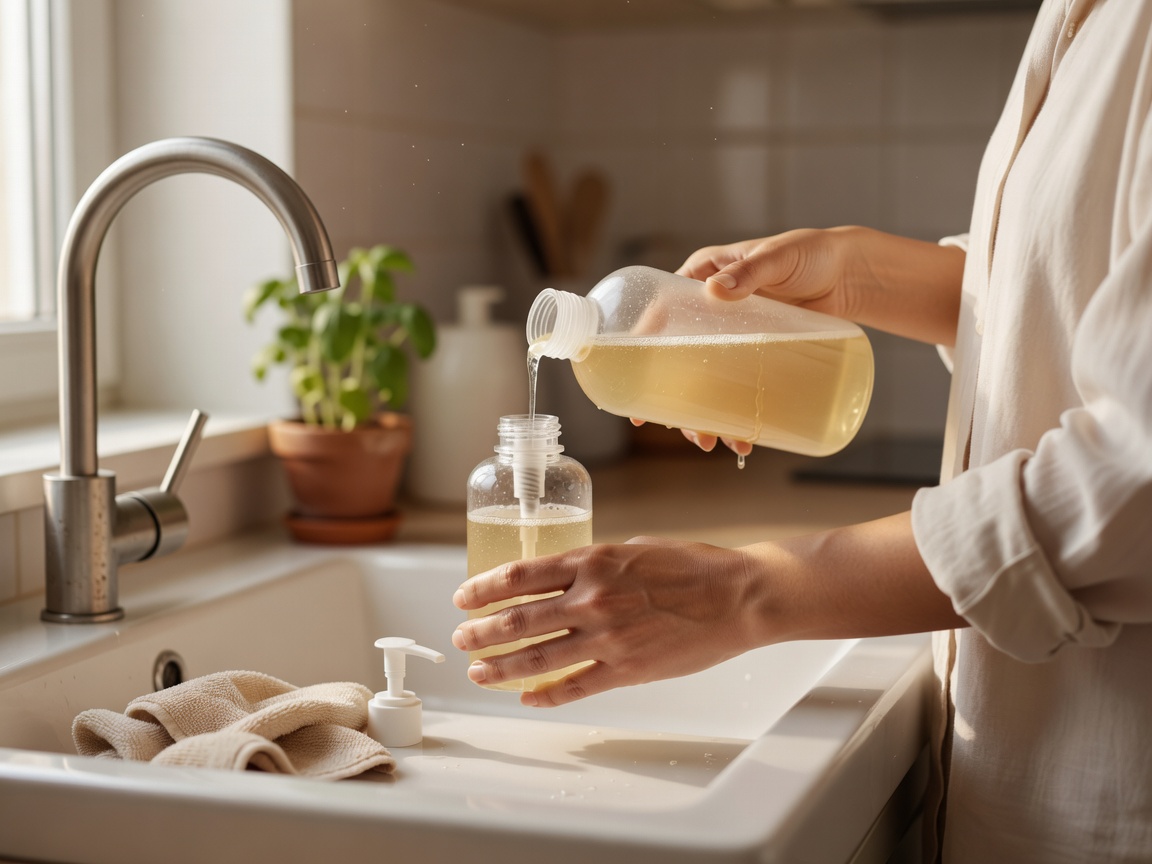
Compare the three common systems
A large refill container can reduce the amount of packaging used per measure, especially if its contents will be finished. It also takes space and may be difficult to lift. Check the closure, pouring method and whether a smaller bottle can be filled without spilling. Buying a size that expires, separates or becomes awkward to use does not solve the original problem.
A shop refill station can let you bring back a compatible container, but access matters. Ask how the shop identifies the formulation, supplies safety information and manages container requirements. Combine visits with a journey you already make where practical. Do not assume a shop will accept any bottle or that two products with similar names have the same ingredients and instructions.
Concentrates and dissolvable formats reduce the amount of water transported in the product, but their packaging and performance still need examination. Follow the specified dilution exactly. Stronger is not necessarily more effective or safer. The product should explain which bottle, water temperature and storage conditions to use, and how long the prepared solution remains suitable.
Preserve the safety information
Keep products in their original containers unless the manufacturer explicitly supports a refill container. Never put cleaning chemicals into beverage bottles or food jars. A refill bottle needs a durable, readable label with the product identity and relevant directions. Preserve the original safety information so another household member can understand the contents without guessing.
Never mix cleaning products. In particular, bleach can release hazardous gases when mixed with acids or ammonia-containing products. An almost empty bottle is not an invitation to combine the remainder with something else. Follow disposal directions for unwanted product and local hazardous-waste advice where applicable. Keep all cleaning products and concentrated refills away from children and pets.
Clean only as the system requires
Some refill systems specify washing and complete drying between fills; others require a different handling process. Follow the product instructions rather than applying one household rule to every formulation. Repeatedly topping up a hand-wash dispenser without the recommended cleaning can allow contamination to build up. Adding water to stretch a ready-to-use product can also alter its preservative balance and performance.
Inspect the pump, dip tube, trigger and seal. A bottle that survives for years is less useful if its proprietary pump fails and no replacement exists. Before buying, look for a spare-part reference, compatible refill supply and clear care guidance. A glass dispenser may look durable but be a poor fit on a slippery bathroom edge or in a home where breakage creates particular risks.
Read claims narrowly
The US Environmental Protection Agency’s Safer Choice program evaluates products against its criteria for ingredients and other requirements. It does not mean a product is harmless in every use or that its packaging has no impact. The EU Ecolabel also has product-category criteria; a label is not a substitute for checking suitability, dosage or local disposal arrangements.
The Federal Trade Commission’s Green Guides explain principles behind environmental marketing claims in the United States. They are a useful reminder to question broad phrases such as “green” or “planet friendly.” Ask what is reduced, against which comparison and over how many uses. A recyclable outer carton does not establish that every sachet, lining or pump component is accepted in your local collection.
Check whether the system survives ordinary life
After a few refill cycles, review spills, extra trips, time spent cleaning and any product left unused. Notice whether people use the correct dose or abandon the dispenser because it is difficult to operate. Accessibility, allergies and skin comfort are legitimate reasons to choose a different format. Keeping a safe, familiar product while reducing waste elsewhere is better than forcing a routine that fails.
If refilling works, expand slowly. You do not need identical bottles throughout the home. You need products you can identify, refill supplies you can obtain and parts you can maintain. Record the refill name and pump model in your household ledger. That small piece of information may prevent an entire bottle being replaced next time a component wears out.